
Research
Behavioral components of fatigue across aging and Parkinson’s disease
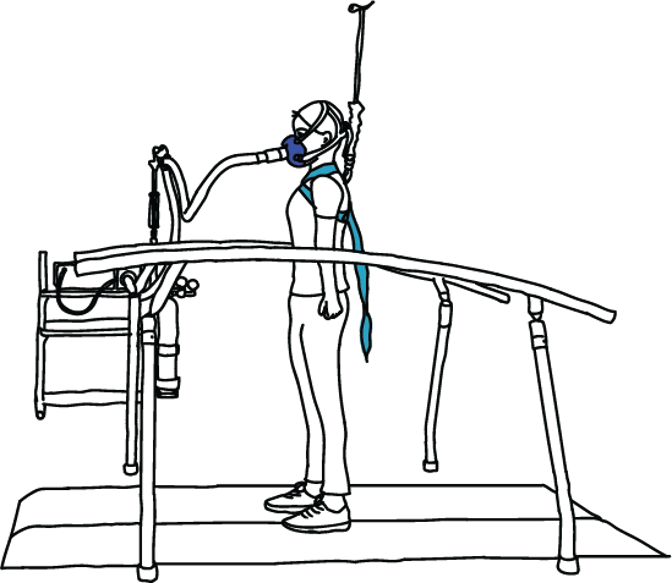
Fatigue is a pervasive and disabling symptom across both health and neurological disorders such as Parkinson’s disease (PD). Approximately half of individuals with PD report experiencing fatigue, limiting daily function and negatively impacting quality of life. Traditionally, fatigue has been assessed using self-reported questionnaires. While valuable for screening, these subjective tools offer limited insight into the underlying mechanisms of fatigue or how it unfolds in real time. To quantify fatigue, we investigate how fatigue arise and impact movement, incorporating techniques from decision neuroscience, biomechanics, psychology, and physiology. Ultimately, we aim to inform targeted strategies for improving quality of life by directly treating symptoms of fatigue.
Related Work
- Agostina Casamento-Moran, Aram Kim, Joonhee Lee, Vikram Chib. Fatigue reflects an affective response to dyshomeostasis and is part of an allostatic strategy. Psychophysiology 60, 2023
Neural substrates underlying components of fatigue
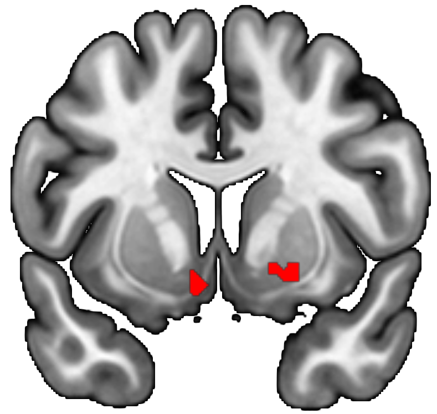
Fatigue is increasingly recognized as a behaviorally multifaceted construct, encompassing at least three interacting dimensions: (1) feelings of tiredness, reflecting interoceptive and emotional appraisal of bodily state; (2) effort perception, which arises from the integration of sensory and motor signals to estimate exertion; and (3) effort cost, the subjective valuation of physical effort during decision-making. The multifaceted nature of fatigue suggests a distributed neural architecture. Feelings of tiredness can be associated with interoceptive and salience-related regions; effort perception with sensorimotor integration hubs; and effort cost with valuation and motivation circuits. This project will develop objective markers that quantify fatigue in real time and reveal the behavioral and neural mechanisms that give rise to it.
Related Work
- Aram Kim, Vikram S Chib. Neural substrates underlying the expectation of rewards resulting from effortful exertion. bioRxiv. 2024
- Purnima Padmanabhan, Agostina Casamento-Moran, Aram Kim, Anthony J Gonzalez, Alexander Pantelyat, Ryan T Roemmich, Vikram S Chib. Dopamine facilitates the translation of physical exertion into assessments of effort. npj Parkinson's Disease. 2023

Motivation and control of complex locomotion
Reduced motivation for movement in challenging environments can limit independence and contribute to declines in control of complex movement, particularly in aging and neurological conditions. This not only reduces daily activity but also undermines physical health, confidence, and quality of life. Movement decisions often involve weighing potential reward against the effort required, striving to maximize benefit while minimizing effort. Therefore, we study why people choose to move or choose not to move and what motivational factors help individuals overcome motor inefficiency and coordination challenges in complex environments.
Related Work
- Alice R. Klein, Soobin Hong, Aram Kim, Vikram Chib, Sanjay G Manohar, Masud Husain, James Gold, and Adam Culbreth. Examining Effects of Effort and Reward Magnitude on Effort-Cost Decision-Making in People with Major Depressive Disorder. Cogn Affect Behav Neurosci. 2026
- Aram Kim, Kari S Kretch, Zixuan Zhou, James M Finley. The quality of visual information about the lower extremities influences visuomotor coordination during virtual obstacle negotiation. Journal of neurophysiology. 2018
Mobility-Based Decision-Making as an Early Behavioral Marker of Cognitive Decline in Parkinson’s disease
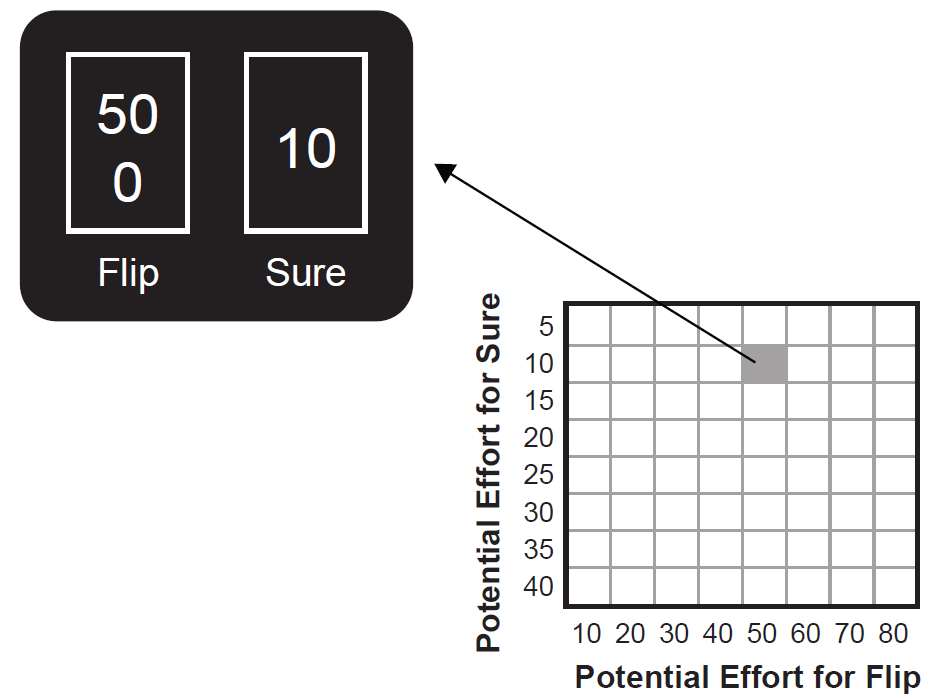
Cognitive impairment in Parkinson’s disease emerges gradually and often precede more advanced stages of neurodegeneration. Individuals with PD and mild cognitive impairment frequently exhibit subtle executive dysfunction that affects real-world mobility and functional independence. Effort-based decision-making paradigms have demonstrated altered value integration as an early indicator of executive dysfunctions in neurological populations such as Alzheimer's disease. Therefore, the long-term objective of this research program is to establish mobility-based behavioral markers that detect early cognitive vulnerability and inform individualized, movement-centered rehabilitation strategies in PD and aging populations.
Related Work
1. Yu-Chen Chung, Beth E Fisher, James M Finley, Aram Kim, Andrew J Petkus, Dawn M Schiehser, Michael W Jakowec, Giselle M Petzinger. Cognition and motor learning in a Parkinson’s disease cohort: importance of recall in episodic memory. NeuroReport. 2021